By Adrian Mancilla
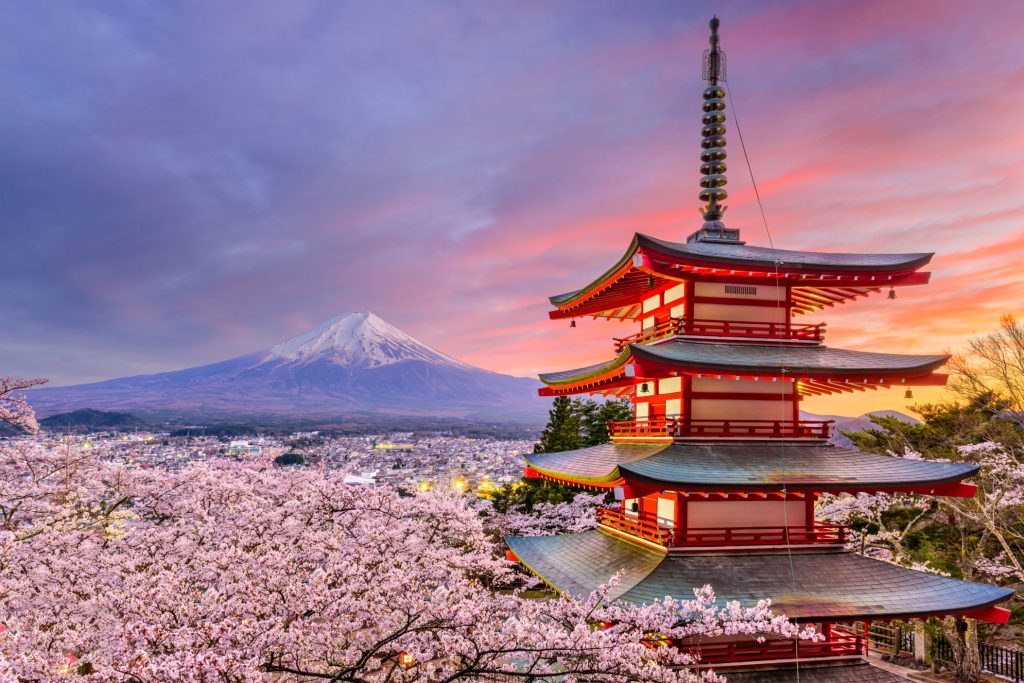
Japan is marked as a country that is garnered on the ideal of tradition, respect, and wisdom around its culture. A country that has always been well respected and well looked at upon its reputation to other countries, as well as a political country in its own right that has been built on the cornerstone of following tradition and ancestral knowledge. Economically, Japan stands upon one of the best nations when it comes to their GDP, as well as their purity of economy, being the fourth-largest economy in the world. However, where do these aspects translate for Japan and its media ventures? As well as its freedom of not only speech for the press, but internet freedom as well?
Social Responsibility Theory –
This theory may relate the most to Japan and the way the media is treated in the country for its ability to relay information to the public and be able to express their own views freely. The social responsibility theory makes the press be a lot more responsible than they are free of expression, essentially looking out for what exactly they may be publicizing and how it can affect the people who read it and what it may do to their viewpoints. It is more so looking at the responsibility of maintaining a flow of economic status and self-sustainability that controls the balance of how the media functions. As far as the commentary on the government and politics, it is allowed to be free, but it needs to stay unbiased so that it cannot be looked at as doing it for any gain, or maintaining an image for the sake of gain.
As the US stands, it is closer to the Libertarian or Free Press Theory, which states that the press is as free and unhinged as it can be without much repercussions, and/or influence especially from any government interference that may or may not hinder the information being relayed to the public. With most press theories it always will rely on and put into a spectrum how freely the press may report information to the public. In comparison to Japan the main difference is, over recent years, the Japanese press has been a bit more limited in their limited amounts of information as the government has become increasing “hostile” towards press that is not as established as the five most respected and established networks in Japan, creating this climate of mistrust, disloyalty, and really if anything favoritism towards smaller news outlets tat are simply trying to do the same exact job as the bigger media corporations are, but are less respected, this is due to the nationalist right that has risen to power since 2012. (RSF.org).
So, is the press that free to report on whatever they may like and be able to properly form an opinion on a topic that may be considered political? Well, yes and no. With this type of situation, journalists are in fact allowed to report on findings or topics of discussion involving their leaders, but it may be met with self-censorship as the nationalist right party may meet them with challenge on what they may or may not be allowed to publish publicly, due to harming reputations. This is fact follows more the Authoritarian theory, but it only applies to one side of Japan’s political spectrum, as it does not fully apply to the whole picture. It happens even here in the US, with many politicians (coincidentally also in the right mainly), will try to censor certain stories from coming to light or dumb down a story to make it not seem like that much of a big deal as it may be to the public. This in itself can be argued as social responsibility, but is it truly responsibility if it only protects an individuals reputation?
Newspaper –
According to Reporters Without Borders, and also the official CIA website, Japan operates very similar to the US when it comes to the way the media is translated as a business in the sense that there are 5 major corporations that own the newspapers with how heavy they are in rotation in Japan. Two of the biggest newspapers in Japan include Yomiuri Shimbun (or 讀賣新聞, as it is written out in Kanji), as well as Asahi Shimbum (or 朝日新聞, written also in Kanji), both of these corporations have one of the highest newspaper circulations in the world per day, at 6.8 million for Yomiuri Shimbun, and 4 million for Asahi Shimbun. (RSF.org).
As it stands here in the US, it is a very similar function as 5 main powerhouse groups own hundreds of daily newspapers across the country, the most known being, Gannett Co. Inc., Alden Global Capital who owns Tribune which used to own The LA Times, and is now privately owned by Billionaire biotech Patrick Soon-Shiong, who is also looking to move the acquisition of The LA Times to another group due to “financial hardships”, and Hearst who altogether own more than 300 daily newspapers throughout the US, a lot of power of publishing and control over what can be said and what will not. (Harvard.edu).
As it applies, the social responsibility theory still applies to the newspaper in Japan, as it still has enough freedom to report to the public without being fully censored, just yet at least, but we will see as time goes on.
Radio –
Radio in Japan was very vital following WWII, and helped many citizens receive their information in the fastest and most effective manner. The radio was never seen at first as a form of entertainment, mainly as a form of knowledge and information. The interesting thing about the NHK or the Japan Broadcasting System (In English), is that nationwide they have a little over 950 radio stations in the whole of Japan, in comparison to over 15,000 involved here in the US. Tokyo itself has only 12 radio stations, including AM stations, while in comparison Los Angeles has 73 radio stations, not including AM as well.

Not lots of official information can be found over the NHK, however, taking a look at much information I found it seems like whatever the NHK provides to the public is much more informative and is also now trying to move fully to an HD format and leaving AM altogether. By 2028, the NHK announced that all of their broadcasts would be only going through the FM format from then on. (Mainichi.jp). As it stands for the social responsibility theory, not much is really controlled on what can be said on air or not, however, the NHK is federally funded, so it may not be as explicit, but it still seems like it might be more along the lines of the free press theory.
TV –
Television is also one of the biggest mediums in all of Japan. Also one of the most consumed as Japan happens to have one of the oldest average populations in the world, which means more TV is consumed daily than the internet and its advertisements. Since the 60’s and 70’s, TV has been known to be a very important basis for advertisers to extend to consumers.
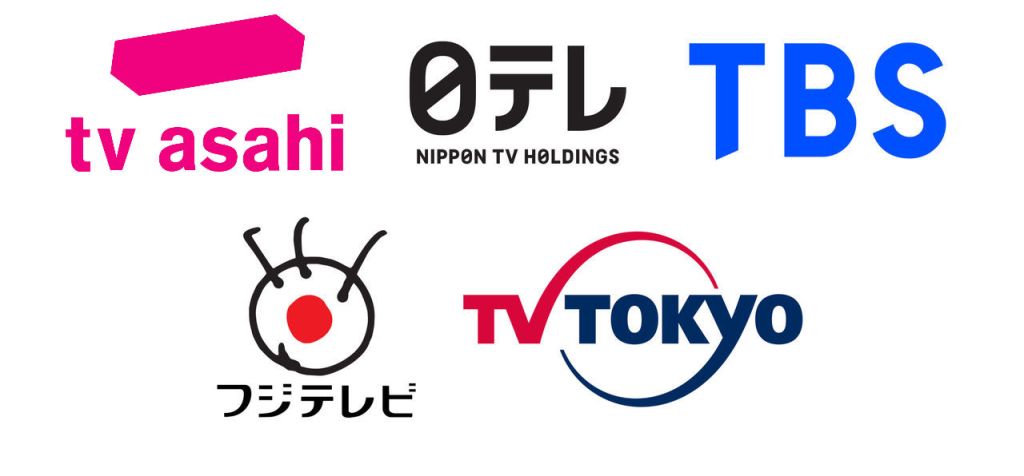
As we can see as well, 3 of the 7 main tv broadcasters also have something to do with the Newspaper in Nippon, TV Asahi, which also owns a huge name newspaper, TBS which also owns radio broadcasting channels, as well as, and not pictured, NHK which requires you to pay a fee to them if you do own a TV in your household, a monopoly if you’ve ever seen one. Out of the 7 main tv broadcasters in Japan, 2 are owned by the NHK, while the rest are seen as commercial broadcasting where it reportedly sees 291 Japanese oriented tv channels, but almost 7,400 in total, with the NHK operating close to 4,400 of those channels. (Statista.com).
To think about this medium and where it may be held in the 4 theories, I would say its more under the impression of being part of the Authoritarian Theory where its not even the government that controls the television broadcasts, it seems its more the NHK that controls a lot of the channels, more than half to be exact, which absolutely holds a lot of power on what can and cannot be shown on TV, especially since the NHK controls and broadcasts most of the informational and political channels throughout Japan. Similar to the US, where 5 main corporations own most of the broadcasting channels in America, Japan also holds that same type of power.
Internet –
Finally, looking at the internet and the way it operates in Japan, it is seen as one of the most advanced and well-regarded on the planet. The current trend continues to increase as it has gone up 17.4% from May 2022 to May 2023, in terms of download speed to 30.5 Tbps. There are actually dedicated data centers in high density districts such as Tokyo and Kyoto, which offers much more free-range and flexibility for Japan and its subscribers for internet access. As of 82.9% of the population is currently using the internet which requires a lot of internet providers to be used throughout the country, one of the few mediums that promotes competition and less monopoly. (Apnic.net).
There are over 540 internet providers in Japan in comparison to the 2,900 across the US. When it comes to the ownership of these internet providers, Japan is very free when it comes to the regulations and security of internet providers and how they are controlled, yet the people of Japan although having full freedom of speech online, are almost encouraged indirectly to self-censor themselves online in terms of protecting the reputation of the government and protecting their reputation. (Freedomhouse.org).
In terms of what theory the internet may follow, it definitely seems like it absolutely falls under the Libertarian Theory because of how free it is of expression and how people may show what they would like to speak about and access, however an underlying tone of authority does fall under there, due to them indirectly encouraging self-censorship.
Conclusion –
As it stands, Japan is very much free of many regulations and does not have to worry much about having to restrict their citizens from trying to access or speak about much. The US itself in comparison is basically the same although as the rising power from the right, as well as in Japan is almost encouraging people to speak on certain topics without bringing others to light that may hurt the reputation of an individual. To get more opinion based, the government having a hand on what may or may not be seen, heard, or read on different mediums is never a bad thing as long as it is never made to be a national security danger when it truly may not be, but in comparison the outrage we have in US especially online over such mundane topics, mainly encouraged by the right, and extreme left, can be influenced and place people under uncertainty which can happen in any country. As the mistrust ensues in Japan and journalists are continuing to feel like they are endangering themselves to be able to relay information to the public, it will be interesting to see especially with the youth of Japan, how these monopolies and controls continue to suppress Japan in a sense to the public. While influence is always conducted in any governmental scene, it will be interesting to see where it may go, through influence from the public itself.
Sources Cited –
- 44 of 47 AM radio stations in Japan to switch to FM by 2028. The Mainichi. (n.d.). https://mainichi.jp/english/articles/20210616/p2a/00m/0na/013000c
2. AP News. (2023, July 11). Los Angeles Times Owners Sell san diego Union-Tribune to publishing powerhouse. AP News. https://apnews.com/article/la-times-san-diego-union-tribune-sold-34ee7f7c269e8f9a342adf85e336a2ab
3. Central Intelligence Agency. (n.d.). Japan – World Factbook. Central Intelligence Agency. https://www.cia.gov/the-world-factbook/countries/japan/#communications
4. FM radio stations in the Los Angeles Area. FM Radio Stations in Los Angeles County, California. (n.d.). https://www.laalmanac.com/media/me10.php
5. Götting, M. C. (n.d.). Topic: Radio industry. Statista. https://www.statista.com/topics/1330/radio/#:~:text=There%20are%20over%2015%2C445%20radio,piece%20of%20this%20massive%20market.
6. Index of seven big owners of Dailies. Index of Seven Big Owners of Dailies. (n.d.). https://projects.iq.harvard.edu/futureofmedia/index-seven-big-owners-dailies
7. Japan. Bienvenue sur le site de Reporters sans frontières. (2022, October 6). https://rsf.org/en/country/japan
8. Japan: Number of NHK TV Broadcasting Stations 2021. Statista. (2024, February 5). https://www.statista.com/statistics/1198415/japan-number-nhk-tv-broadcasting-stations/
9. Japan’s history of Radio. Japan Up Close. (2023, March 17). https://japanupclose.web-japan.org/techculture/c20230317_5.html#:~:text=Radio%20broadcasting%20began%20in%20Japan,followed%20by%20Osaka%20and%20Nagoya.
10. Published by Statista Research Department, & 5, F. (2024, February 5). Japan: Number of NHK Radio Broadcasting Stations 2021. Statista. https://www.statista.com/statistics/1198430/japan-number-nhk-radio-broadcasting-stations/#:~:text=The%20Japan%20Broadcasting%20Corporation%20(NHK,new%20broadcast%20law%20in%201950.
11. Topic: Television industry in Japan. Statista. (n.d.). https://www.statista.com/topics/9196/television-industry-in-japan/#editorsPicks
12. Toyama, K. (2023, September 5). The internet landscape of Japan. APNIC Blog. https://blog.apnic.net/2023/09/04/the-internet-landscape-of-japan/


 Amuse Productions
Leave a comment